In partnership with


✨ MYSTERY AI LINK
This link leads to one of the most interesting things I’ve seen in AI recently.
🛠️ NEW AI TOOLS 🛠️
THE BIG STORY

What’s cookin’? Anthropic’s new Working with AI study suggests AI may be eliminating some job openings before anyone applies. Researchers interviewed 66 executives, managers, and employees at 58 U.S. customer companies. People at roughly two-thirds said AI had reduced hiring, usually because existing staff could handle growth without extra help. Only two companies reported automation fully eliminating a position and costing someone a job; while ten reported hiring more because of AI. The interviews were anonymous and the sample wasn’t representative of all industries, however, so this doesn’t tell us how common those changes are across the economy.
Hunter’s take: The hiring number stands out more than the layoff number to me. Keeping existing staff is good, but that’s little comfort to someone applying for jobs that no longer open up. Companies will still need experienced people down the road, but getting that experience is difficult when AI is doing more of the beginner work.
📊 DAILY POLL
If AI helps you finish early, should you have to tell your boss?
(Vote to see what others are saying)
ALSO ON THE MENU
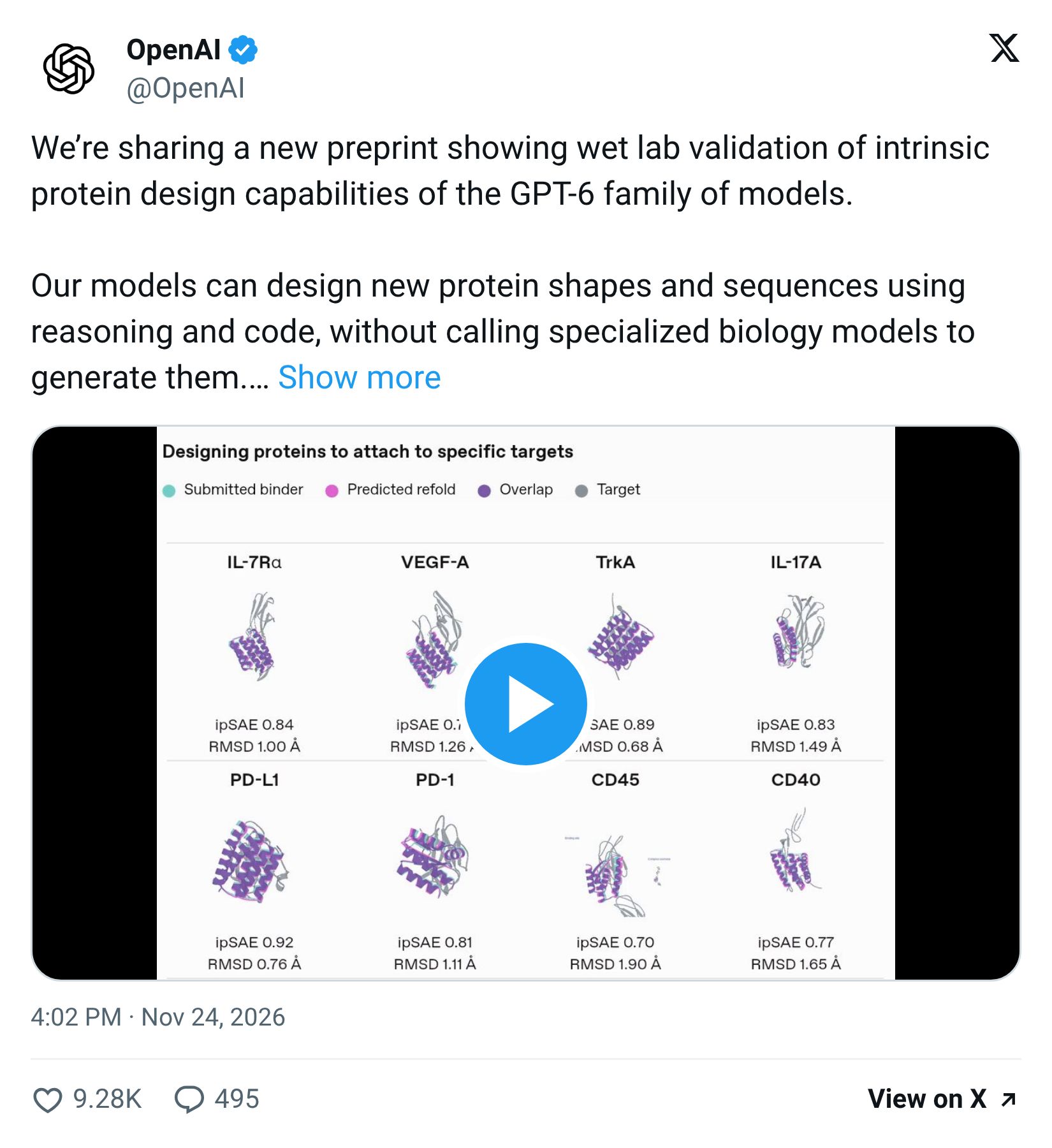
What’s cookin’? What if the same AI you use to write emails could help scientists develop new medicines? OpenAI used GPT-6.2 alongside specialized AI tools to design tiny proteins that could attach to specific targets in the body, much like a key fitting into a lock. This matters because some medicines work by attaching to proteins involved in disease and changing how they behave. OpenAI’s research partner Onava actually manufactured and tested the designs in a lab. In one experiment, 35 out of 322 candidates successfully attached to their intended targets. The research has not yet been peer reviewed, and none of this proves the proteins can treat a disease, but it shows that AI-generated designs can work in a real laboratory.
Hunter’s take: One of the challenges of developing new medicines is figuring out which molecules are worth making and testing in the first place. If AI can help scientists narrow down those possibilities faster, it could save time and money in the early stages of drug discovery. What makes this particularly interesting is that a general-purpose AI model like GPT-6.2 contributed to the design process, rather than simply helping researchers read or summarize existing research. There’s still a long road from a successful lab experiment to a safe, effective medicine, though.
PROMPT OF THE DAY:
Help me evaluate my next career move using my experience, strengths, interests, income needs, location, and long-term goals: [details]. Identify three realistic directions, tradeoffs, and the smallest experiment for each.
HAS AI REACHED SINGULARITY? +0%

Holding at 77%, with no change today. The protein experiments give us a real lab result to watch, while the hiring study shows how AI is already changing work. Neither establishes a broad jump in AI’s ability to handle unfamiliar tasks reliably.
The meter reflects my editorial judgment.
HOW ARE THE BIG AI PLAYERS DOING?
(Click a ticker for more info)
What do you think of today's newsletter?

Have a Big Question about AI?
Here’s your chance to get a straightforward answer, from an expert in the field.

Hi — I’m Hunter, a PhD candidate whose work has appeared in major academic journals and popular tech outlets. I founded FryAI to make staying ahead of AI clear, accessible, and fun.